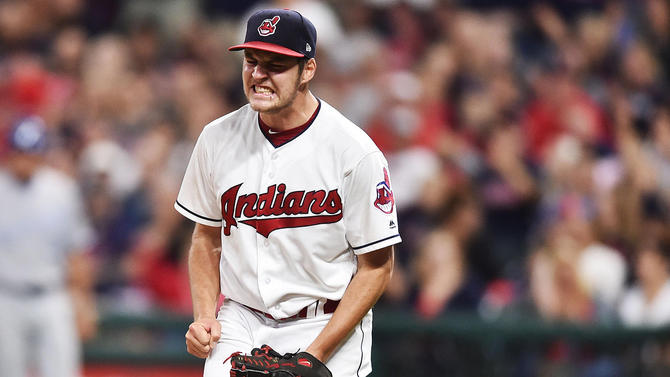
 (Photo - USA Today, Tables and Information - Brooks Baseball.)
Trevor Bauer is one of the more polarizing figures in baseball today. In a sport that skews conservative, he’s been targeted on Twitter for sharing his political views. He drew the ire of Indians fans in 2016 when he cut his hand during the postseason working his hobby, flying drones. And that doesn’t even begin to touch his thoughts on the game of baseball, ranging from thinly veiled potshots at sticky substance-using pitchers to extolling his own personal virtues. He loves weighted ball exercises, warms up by taking a crow hop and unleashing his hardest throw of the evening, and has a hammer curveball. In a team sport, he is one of the most recognizable individuals.
However, one thing he has been vocal about, and backed up with his performance on the mound, is the reinvention of his slider. The much ballyhooed process has been a hot topic around baseball (Adam Ottavino reinventing a pitch as well this offseason makes me think that pitch engineering is going to be all the rage this upcoming winter).
The best profile I have read was written by Zach Meisel of the Athletic. He went on the record stating he wanted something between his fastball and his curveball, with a horizontal break that he could throw for strikes. After working on it at the Driveline facilities in Washington, he broke it out in six April starts, and the early results have been encouraging to say the least.
I’m only going to talk about results here - as previously mentioned, Meisel does a great job going into the process embarked upon by Bauer.
Bauer has been throwing his slider way more often in 2018. Like, ridiculously more often. He’s throwing it more in virtually every situation, ramping up his usage when he’s ahead in the count or with two strikes.
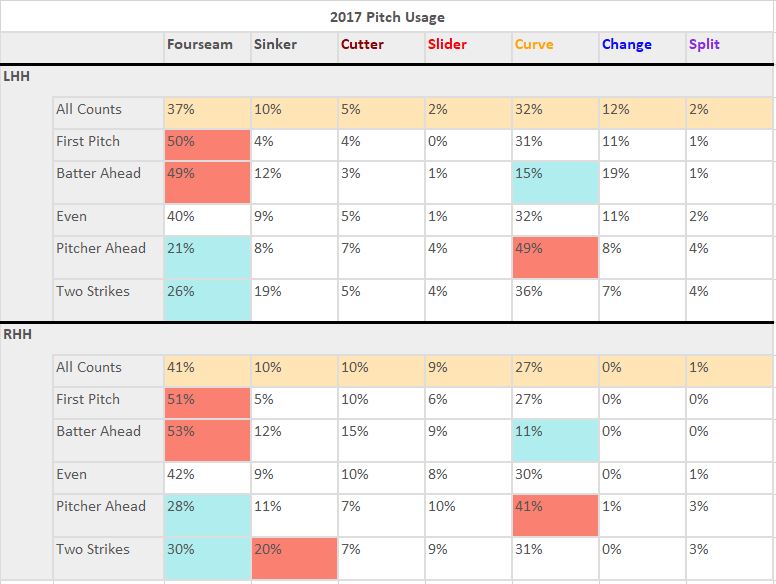
He’s effectively replaced his curveball usage in those situations with his slider, against both lefties and righties. When he’s ahead, lefties can expect to see the slider 25 percent more, while righties are seeing the frisbee at an increased clip of 29 percent (10 percent in 2017 to 39 percent in April of 2018). Against lefties in 2017, his curveball was thrown 49 percent of the time while he was ahead in the count - it’s still prominently featured, but the usage has gone down 12 percent to 37 percent in 2018.
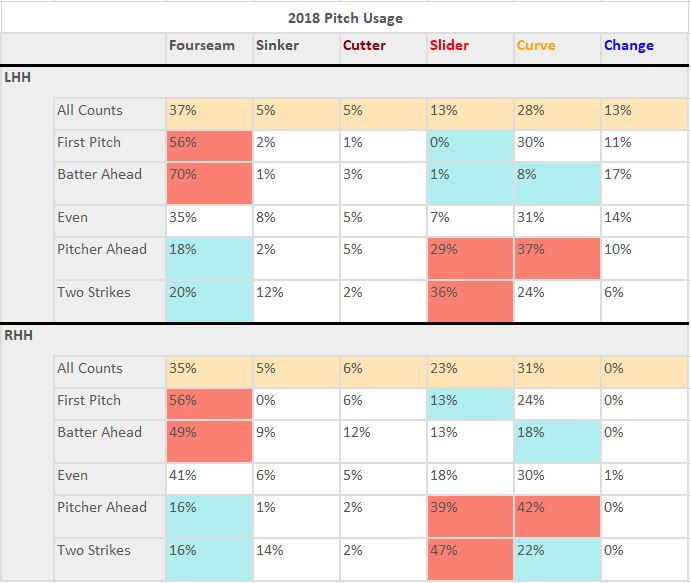
With two strikes, the disparity is even more startling - Bauer throws it a full 38 percent more against righties and 32 percent against lefties. His slider became his out pitch overnight - a stunning reinvention that seems to have unlocked a higher level of success for Bauer. He can bury the slider backfoot against lefties or throw it backdoor, a valuable weapon that almost expands the zone in the sense that batters have to protect against both with late horizontal movement.
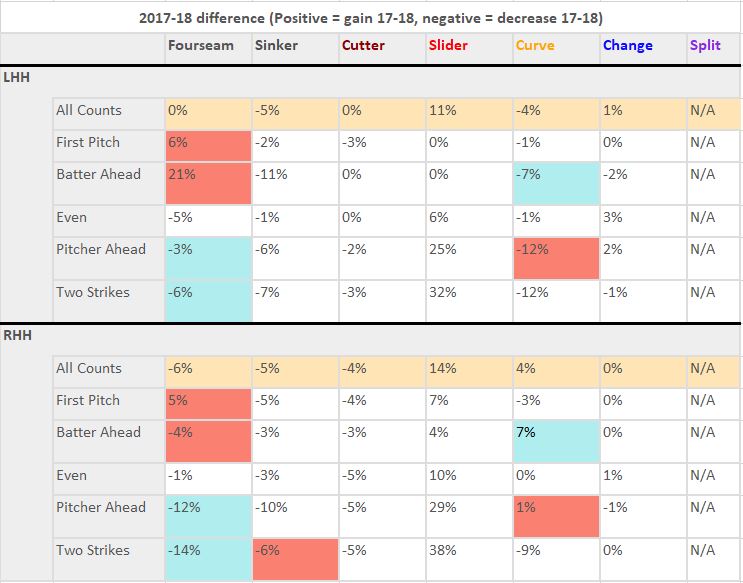
While he’s re-imagined his off-speed pitch mix, he’s still utilizing his fastball the majority of the time to set up the first pitch or when the batter’s ahead, exhibiting a conventional approach to pitching - use the fastball to get ahead or when behind in the count, and use off-speed stuff to throw the batter off balance late in the count. It helps that both his slider and curve generate massive amounts of movement as batters have a tougher time picking up his stuff.
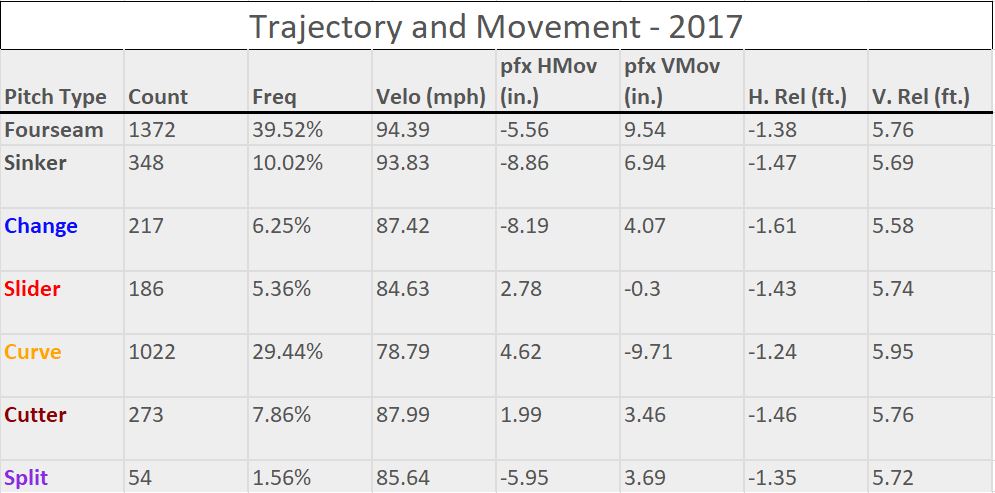
Bauer’s slider behaves like a frisbee, almost doubling its horizontal movement from 2017 to 2018. Simply put, this means more pitches that start out in the zone dip out of the zone, or a batter may pick up a pitch that looks way out of the zone to start, only to have it dip into the zone at the last possible moment. In particular, the horizontal movement has allowed him to increase his soft contact rate by 3.3 percent, from 15 percent in 2017 to 18.3 percent so far this year.
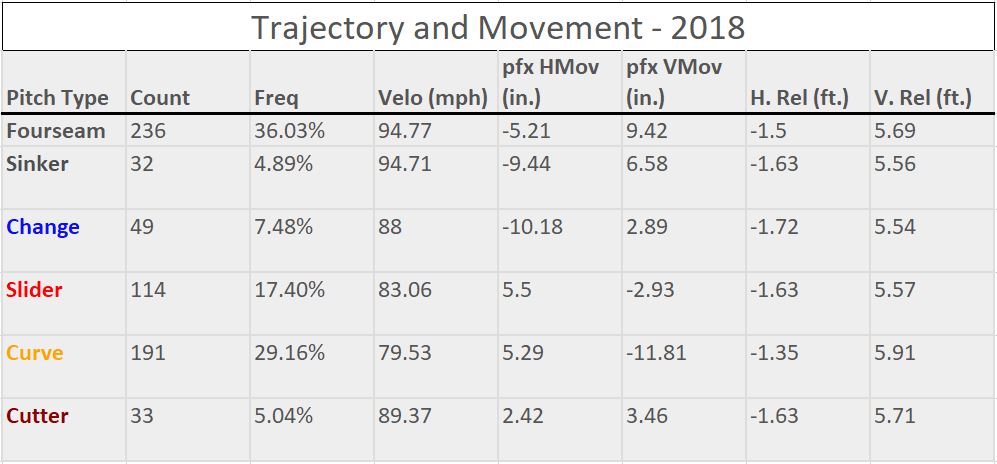
This plays off a theory that weak contact is easier to induce by generating more side to side contact, where a batter might hit the ball off the end of the bat or get jammed even if his swing is on the same horizontal plane as the ball.
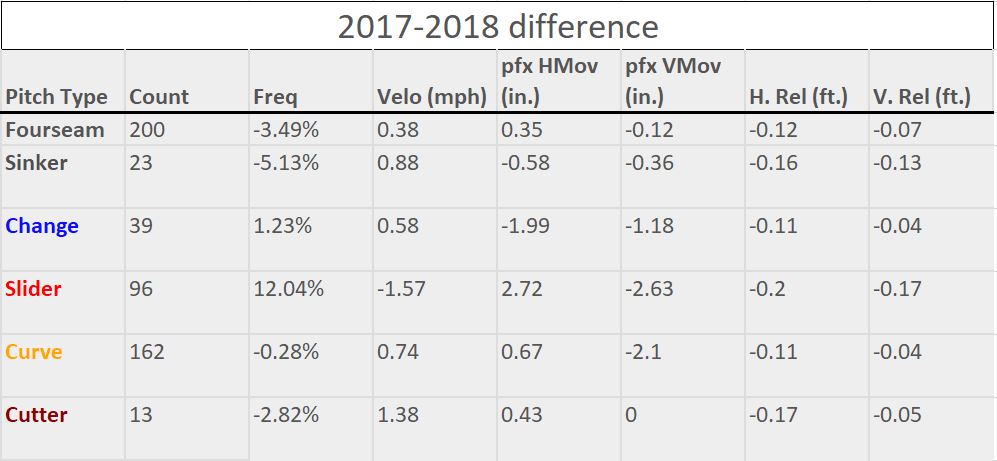
Combined with the relative rising effect of his fastball and the massive drop his curveball generates, Bauer’s stuff is harder to pick up for hitters, generating more swings and whiffs for his fastball, slider and curveball.
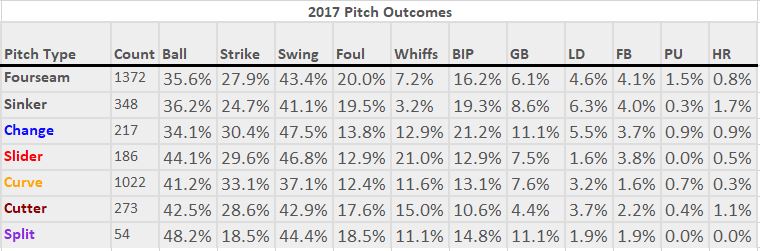
What’s the end result for Mr. Bauer? He hasn’t given up a homer on his slider in 2018, and he’s averaging 10.5 K/9 innings, well above his 8.7 career rate. It would also be a full half strikeout higher than his single season best of 10.0, achieved last year. Not so coincidentally, he seemed to improve during the second half of last year as well. His FIP (fielding independent pitching, often used as a measure of true pitching performance because it removes any reliance on plays made in the field) is at a career low 3.17, indicating that his results are for real.
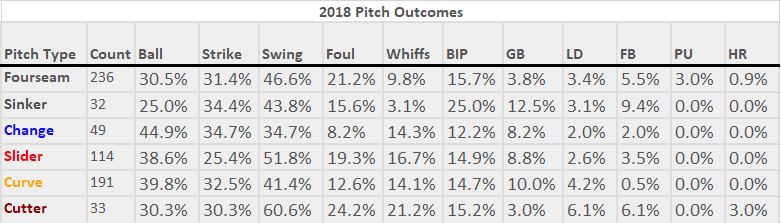
His walk rate is a tad higher than last years, where he walked 60 men in 176.1 innings compared to this year’s 19 BB in 46.1 innings (on pace for 72 BB if we extrapolate to the same inning count from 2017).
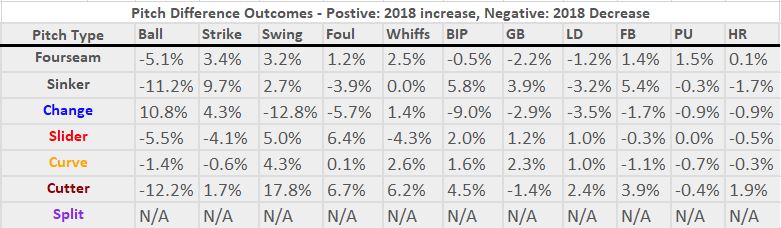
I think Bauer slots in as the #3 pitcher the Indians need behind Corey Kluber and Carlos Carrasco, and if he keeps making strides and improving his walk rate, he’s got the stuff to overtake Carrasco as the #2. Let’s see how the rest of the season unfolds.