What I've Been Reading

Edgedancer (The Stormlight Archive, #2.5)
Lift is starvin’ awesome

Pachinko
A great sprawling arc of a multigenerational narrative. I think for so long I’ve been guilty of this Western view of Japan as this placid, uniform society with only vague knowledge of its 20th century transformation, which was only reinforced by popular (Western) media or Japanese media that has made it into American pop culture, only reading classic novels and authors about Japanese-ness. While there is a paradox in pointing to Pachinko, which has received critical acclaim in Western circles, as narrative altering, it indeed has shifted my thinking of Japanese and Korean-Japanese society in a fundamental way.
Not what I expected; the only thing keeping it from a five star rating from me was the ending in the late 80s felt a bit harried but overall a stellar book and worthy of its accolades. The family contained multitudes without feeling over-the-top in terms of caricature.

The Shards
A wild ride that dragged a bit long at times, with an unsatisfying payoff. Rich kids in the 80s in LA had no rules

Slouching Towards Bethlehem
A fine collection of essays; my enjoyment of Didion and this collection in particular is dampened a touch by all the cultural references I did not look up for fear of losing momentum while reading. Of particular note - both her and Easton Ellis write expansively about driving through Southern California unfettered by traffic; what a dream that must have been

Trust
Maybe it’s because I just saw the movie You Can See Everything and can’t stop thinking about that but there are many parallels between these two pieces of art and what the true nature of objectivity is. Is there really any sort of objectivity in fiction? Especially when explaining objectivity through the lens or who tells the story? I’m dumb and I don’t know anything but I’ve been thinking about objectivity a lot

I Who Have Never Known Men
Not your usual science-fiction. I just don’t think books like this are for me as my simple mind would have liked a bit more action; it’s tough when books are all show no tell. Introspective, matter of fact, and elegant, I just could not sink into it like I can more conventional narratives.

Stoner
An unflinching view of life and what to make of it.
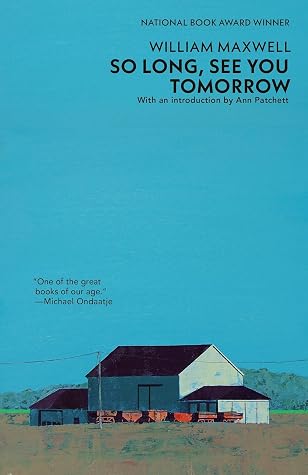
So Long, See You Tomorrow
"What we, or at any rate, what I, refer to confidently as memory - meaning a moment, a scene, a fact that has been subjected to a fixative and thereby rescued from oblivion - is really a form of storytelling that goes on continually in the mind and often changes with the telling. Too many conflicting emotional interests are involved for life ever to be wholly acceptable, and possibly it is the work of the storyteller to rearrange things so that they conform to this end. In any case, in talking about the past we lie with every breath we draw."
This book is already short and quick, but if it were to be boiled down to one phrase, this would be it. A small town murder is relayed over a hundred-odd pages from the vantage point of not only the narrator but close friends and family. Depending on who's vantage point the reader inteprets this from, this murder is (in)explicable, (in)validated, and/or (in)congruous.

Underworld
7 years after I was gifted this book and read the prologue, I picked it up. I'm glad I did.
Maybe I'm too dumb to get it, maybe I'm out of touch with the state of the world when this came out, but the book felt dated (which it is technically, being almost 30 years old), and it felt overlong. I did some reading about the book as I was reading it, and it felt overwrought. I had issues with the repetitive prose (felt mundane) and some of the subplots (Texas Highway Killer, Lenny Bruce, etc) felt like filler. I enjoyed the Shays (wish Matty got more play), and wish there was more time spent in the '50s and '90s versus the '70s and '80s.
As a reflection on post-WWII America, themes of waste, excess, existentialism, and religion all felt spot-on, but I felt as if Underworld was trying to do too much, and trying to get the reader to do too much interpretation under the veneer of personal salvation as seen through the lens of the central characters. I know that "show, don't tell" is the hallmark of good storytelling, but there was a disconnect in my opinion in the driving narrative and the grandiose asides of the state of humanity that Underworld posited.
Overall, a decent book, curious to read more DeLillo, but definitely could have been punchier which would have led to more enjoyment reading this opus.

Console Wars: Sega, Nintendo, and the Battle that Defined a Generation
Interesting topic but a slog to get through. The author wrote a lot of these conversations as if he were writing cutscenes for video games. Probably could have been a lot shorter.

Kin
Deeply human, Jones writes her characters flawed and inscrutable at times yet understood and felt quite deeply. This will break your heart at times. Excellent novel and I can understand why it’s on numerous short lists.

Things in Nature Merely Grow
Such a human book. The author’s sons both die by suicide within 6 years of each other and she explores the abyss and unreality of living through such terrible circumstances. I don’t have the words to really coherently review this other than it made me ponder how we view death, tragedy, and carrying on marking time throughout life. A must read (and re-read).

Straight Man
This book was pretty delightful. I've read books where the main character is a self-described smartass and doesn't take anyone or anything seriously, and the author writes it pretty heavy-handedly. This is decidedly not that, as Henry William Devereaux Jr is a narrator well-versed in his own shortcomings even if he's unsure of the direction to take.
Where this book also excels in my opinion is the supporting cast and their idiosyncrasies.
I read Solar earlier this year and thought this book would be similar, a middle-aged white academic lamenting the lack of anything of significance happening in his life - and it was similar! But a lot better.

The Game of Life and How to Play It
Some pretty decent principles but definitely a woowoo kind of book about the power of positive thinking and manifestation. One of the precursors to the self-help book fad (depending on how you look at it). Saw Vic Mensa mention this book so decided to check it out since it looks like he's been on his thinking man's game, and yeah like I said, decent principles but not the best book out there. a quick read or listen.

Walking Practice
Yeah just a weird book all in all. Part of it is explained in the translators note that discusses the nuance in the original translation that quite literally gets lost in the difference between how Korean and English are written/formatted/visualized. But also an alien that uses tinder-esque apps for sex and sustenance arguably is using the apps better than 90% of folks. Like I said, weird book.

Play It As It Lays
Ennui is a series of rambling drives from San Pedro to Palm Desert, from Long Beach to Ventura and Oxnard, and back again, without discovering much about anything as the tires chew up the miles.
First Joan Didion novel, felt like this book was a breath of fresh air, with how sparsely and matter of factly it was written, every event is left up to the reader themselves to assign relative importance. The 60s were truly a wild time and Play It As It Lays to me, outlines how difficult it must have been to keep sane in the tumultuous, sun-kissed yet drug-tinged hills of Hollywood, especially as a woman. I would say that's showbiz baby, but i know nothing about showbiz.
This might piss some people off but this is the book that Otessa Moshfegh thought she was writing when she wrote My Year of Rest and Relaxation.

The Minotaur Takes a Cigarette Break
I thought I had read this book many years ago but suppose not.
An odd little book that I enjoyed, mostly by thinking about it in the couple hours after each reading session. I desperately tried to think about the broader point the book was trying to make - is the Minotaur an approximation of man? Of the faults and imperfections that separate mortals from immortals, represented by an individual that straddles both sides? Is it something deeper than that that I'm missing?
Ultimately the humdrum nature of the Minotaur's life, the monotony of this (cigarette break) of his life compared to the 5,000 years of life before it (which also seemed monotonous), seem to be the point - at least the point I'm taking away from it. Life is the point, living is the point. There is no grand finale, no blockbuster payoff - sometimes you just live a life and that's the beauty of it - whether you're carving prime rib or fixing a car or going through your nightly self-care routine. There's always something to look forward to, like that cigarette.

Thief of Time (Discworld, #26; Death, #5)
Rare miss for me from Sir Pratchett. While this is technically a Death book, this felt more like a standalone. I read The Truth recently before this and felt like the development of Lobsang and Lu-Tze here was heavy-handed compared to the brisk narrative in the Truth. The other characters like the Auditors felt one-dimensional to me and as much as I love some of the wordplay across the Discworld Universe, Lu-Tze was a bit too much of a caricature for me to get fully invested.

Black Buck
I was shocked to learn after reading this book that it was intended to be satirical, it was way too over the top to be taken with any modicum of seriousness.

The Last Hero (Discworld, #27; Rincewind, #7)
Wow everyone should read more illustrated books. And more discworld. Light story but incredible illustrations, and the Wizards once again come together with Leonard of Quirm to create a fantastical adventure.

Machine
The style of prose was not my cup of tea. Came together a little bit more towards the end of the book

The Fifth Elephant (Discworld, #24; City Watch, #5)
Samuel Vimes reluctantly taking on international relations by order of his wife and Patrician is a great set up to a classic Discworld book. Werewolves and Vampires and Dwarves, oh my Om. Sad that I'm reaching the end of some of these Discworld storylines.

Solar
Pity the educated white academic wallowing in bad decisions, won’t you?

The Truth (Discworld, #25; Industrial Revolution, #2)
Bill de Worde (an all-time Pratchett name) hating his father, living a socialist lifestyle by bunking with a matronly landlord and 5 bums, ultimately fast-tracks his entry into late-stage capitalism by starting media and culture wars in Ankh-Morpork


A Parade of Horribles (Dungeon Crawler Carl, #8)
[ADVANCE COPY REVIEW]
"You will not break me."
There's a gradual shift in the tenor of DCC from LitRPG hijinks (skills! loot boxes! mobs!) to a more contemplative rumination of what it means to be human and maintain your sense of self and your sense of community in times of extreme duress and oppression. We start to see that shift after the Butcher's Masquerade yet I think A Parade of Horribles is when we concretely understand this isn't just a game anymore. The 10th level mechanism is simplistic which allows for the story development to flourish. This does not mean, however, that the mechanics of the game take a backseat - on the contrary, the butterfly effect of the Crawlers trying to break the dungeon and bend the rules of the game is what moves this story forward. I wouldn't be surprised if we move forward outside of the dungeon to wrap up this series. 5/5, will re-read advance copy, listen to the audiobook, and read the official copy in May.

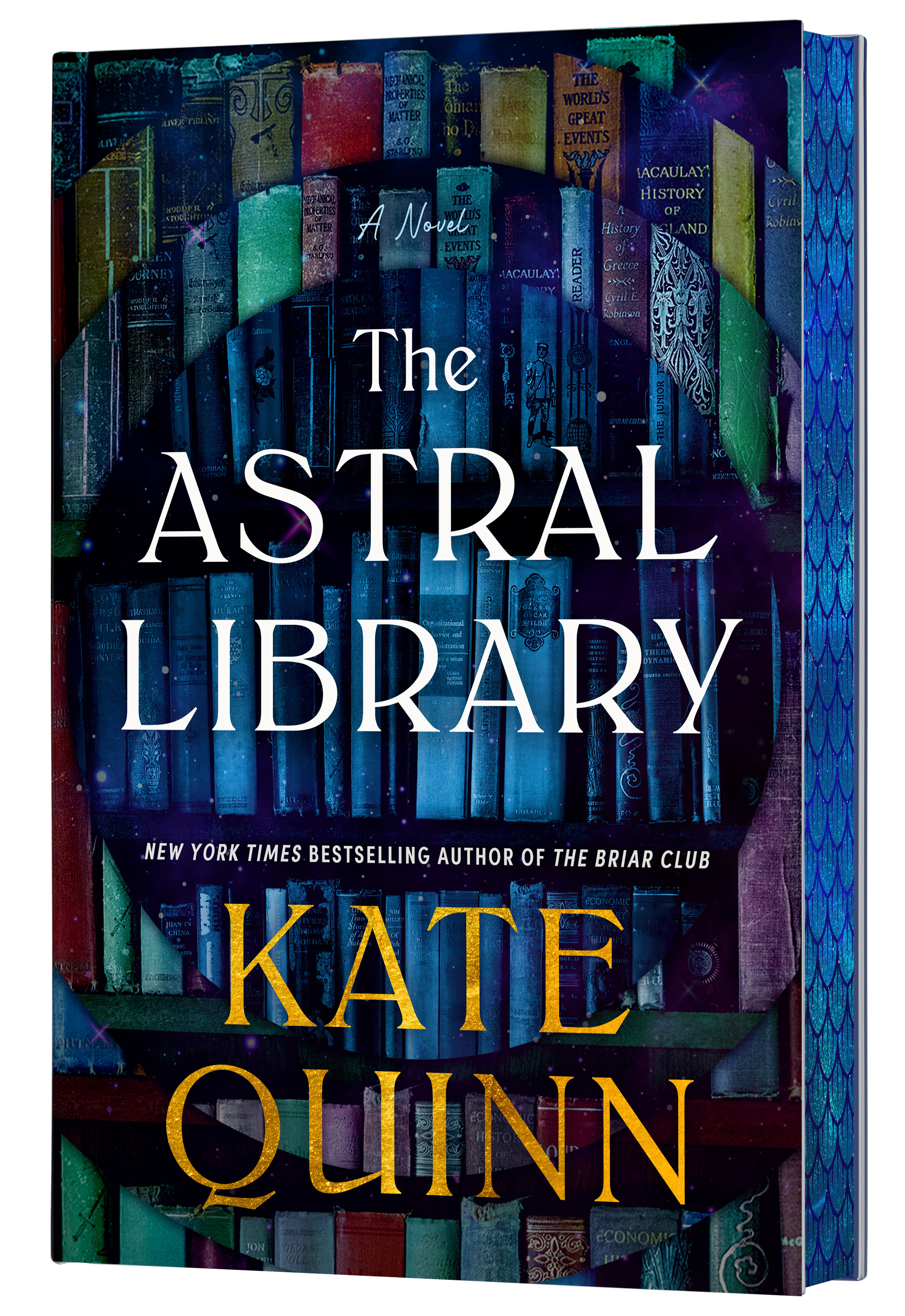
The Astral Library
Just a very hamfisted telling of a derivative premise that falls flat. I finished it because I’m on vacation but I lost it when one of the characters described himself as four different ethnic backgrounds and then didn’t refer back to why that was important to the story at all, just that he was marginalized and we should understand that and empathize with him.
I agree with the author’s opinions (libraries are good, books shouldnt be banned, homogenization and monetization of public goods is bad for society, etc etc) but certain tropes were repeated ad nauseum and the fantasy aspects were trite and uninteresting.
Skip this one


Minor Detail
Unfortunately reading this book was interrupted by a heavy dose of video game cramming. That being said, I wanted to enjoy this book more than I did. The bifurcated parallel storylines were interesting enough but the back half of the book fell a bit flat in predictable ways to wrap the story up. I would have probably preferred a different story structure (and maybe that’s just me!)
This is a story that has a million different variations of the same occupation-based atrocities that are repeated through different bloodlines for the better part of this century. History is doomed to repeat itself.


The Ministry of Time
The book’s primary time-based plot line takes a backseat in favor of the anachronistic set of characters that make up the story, and that is a good thing. Light on time travel physics, heavy on character development, and a fresh take on a time travel romance. There’s some political allegory that doesn’t get very clearly fleshed out but that’s okay.


Bad Company: Private Equity and the Death of the American Dream
An excellent primer into the morbid reality that is private equity. The author does well to simplify concepts and relate to the audience by following the experience of 4 individuals as they grapple with the impact of PE in their daily lives.
Can be a bit dense and dry, but overall a solid read. Reading it made me learn a couple new things and understand just how pervasive PE is across American industry. like the stink of garbage when you’re near a dump is inescapable. Except the dump is America and the smell is PE.

Carpe Jugulum (Discworld, #23; Witches, #6)
A fitting end to the Witches storyline. This is one of Pratchett’s finest examples of writing what *isn’t* and subverting expectations, rather than parody or satirizing the main subject. It sets in once people start calling out Nanny Ogg’s double entendres.
Very solid entry into Discworld. The march towards 41 continues.

The Last Continent (Discworld, #22; Rincewind, #6)
Pratchett back in his bag with maybe his most high-level subtlety to date. I need to spend time digging into all the Easter eggs of which I probably missed half of. Evolution, time travel, and Aussie banter galore and it feels cohesive.

The Coin
Pretty good book. I liked the slightly ethereal quality of the narrator's life mixed in with the mundane. There's a pretty marked shift in the 2nd half of the book that helped contextualize some of the recurring motifs (hygiene, materialism are two that stood out to me). I found this novel overall really engaging and relatable compared to some other books written in this same vein. Zaher's use of plain yet evocative language and smart usage of breaking the fourth wall works really well.

The Woman in the Library
I was also watching Tell Me Lies while finishing up this book and the plots blended together (not in a good way). I suppose the reason I was able to follow along the strings of the separate plots of both book and tv show was that this book was a predictable grab bag of conventional detective fiction - multiple suspicious characters, red herrings abound, and a poorly applied narrative device with a mediocre payoff. Still enjoyable. Would watch Tell Me Lies instead if you had to pick one.

Our Wives Under the Sea
Much like the book, a piece of my brain melted towards the end. genre bender

Light Bringer (Red Rising Saga, #6)
Not often that a book makes you reach down to the depths of your own emotion to figure out how resilience works, how love and emotion, feelings of honor and morality, would play out with everything on the line. Yet still receiving an unexpected payoff that doesn’t solve everything neatly but still makes you hopeful. The 2nd trilogy of this series is darker and more heart wrenching, with betrayal preying on conscience, and doesn’t end the way you want it to but ends the way it needs to. Browns alternative narrator schema works incredibly well here. can’t wait for Red God.

Dark Age (Red Rising Saga, #5)
Even going into this book, the title made me consider that this would be the heaviest book of the series so far and boy did it deliver. The bloodiest book in the series with long protracted war scenes for the first time really opened up the world beyond Darrow’s battles. Positives of the book include a flushing out of the alternative points of view and narrators in introduced in the last book as well as tension between doing what is right and doing what is good for yourself, your allies, and humanity. These are not your institutes new initiates anymore. They are adults hardened war, veterans, and people with difficult choices to make. You can’t please everyone as it seems each main character has had to make a decision they can’t live with

The Serviceberry: Abundance and Reciprocity in the Natural World
This book was a very timely read as we enter 2026. With all of the capitalist- motivated actions of an increasing amount of governments, including our own, the author introduces and explores the idea of alternative economies specifically the gift economy. Group over self, reciprocity over selfishness, and dismantling preconceived notions of what it means to be both successful and happy as an individual and as part of a functioning society are all great reminders to keep others in your heart. Finished listening to this book as I head to my fun little capitalist job. Would recommend and at a two hour audiobook. It’s a great listen.

This Inevitable Ruin (Dungeon Crawler Carl, #7)
After reading this whole series in <1 month, and thinking about what rocks about this book and this series, here are 5 thoughts: - it's just a really fun concept and a blast to read overall, and I think that's underrated. Read what makes you happy, and this makes me happy - the political and socioeconomic commentary is not heavy handed but there's just enough to make you pause and think about where you've seen this in real life before - i have played a fair amount of RPGs and watched a fair amount of reality tv and I love the world-building. It reminds me of Survivor, Fallout, GTA, and Squid Game - Easter Eggs abound - there was a Die Hard reference that I caught only because Die Hard was playing in the background, and I'm sure I've missed about 90% of all Easter Eggs - The concepts generally work, but I will say that sometimes the sheer amount of details are overwhelming. This is a double-edged sword - Dinniman does a pretty good job of having a character or narrative explanation of what transpired and why it was important, or what the callback was, but still rough. However, it does leave room for my dumb ass t0 continue being surprised by a plot device placed 2.5 novels ago in a throwaway AI comment.
I think what also calls to me especially with the 7th installment is the shift in tone, the somber tone finally dominating rather than the wacky comic relief. [spoilers removed]
Overall would recommend to any and all compensated anarchists and former child actors out there

American Bulk: Essays on Excess
An interesting little book that was loosely all interrelated and to me didn’t quite land a tight message, as some chapters felt a bit meandering and not as heavy-hitting. Reminded me of my dad. Between 3-4 stars, but closer to 3.